Framework for combining food waste data with environmental life cycle assessment
The WASTEWISE partners at LUKE have led a study to combine quantified food waste data with environmental life cycle assessment, with the aim of measuring the environmental impact of food waste and its prevention and reduction. This assessment of the environmental impact is valuable for critical analysis of prevention strategies and their potential to reduce environmental impacts.
Most initiatives and studies made to date in this regard have focused primarily on climate impact, neglecting other important environmental factors such as biodiversity and water scarcity. As a result, these assessments may fail to identify possible trade-offs between different impact categories. “Generating reliable data related to the environmental impacts of food waste is crucial for understanding the achievable environmental benefits of food waste prevention and reduction actions, and for designing effective policies and strategies”, stress the authors of the study.
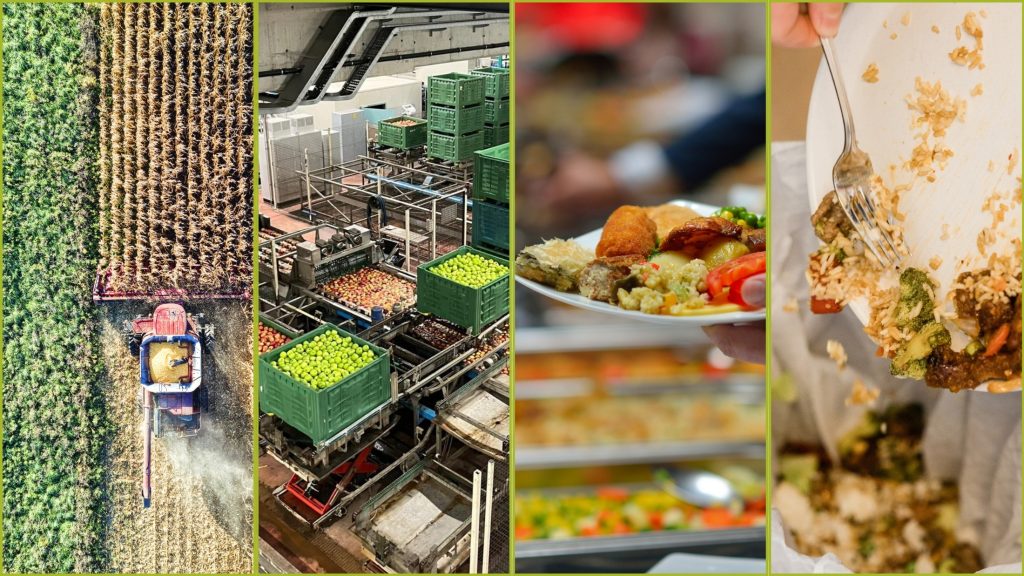
Life cycle assessment (LCA) is a commonly used and standardised method to assess the environmental impacts of products through the whole supply chain, from raw material extraction to final disposal. Since food waste is generated at different stages of the supply chain, the principles of LCA are, in theory, aligned with the food waste monitoring and reporting. However, there are still some methodological challenges, and a common framework to integrate food waste reporting with LCA data is not available, making LCA of food waste laborious and unharmonized.
With the aim of bridging this gap, the WASTEWISE partners have provided a systematic framework for combining the quantified food waste data and LCA data. The framework uses a standardized language to describe foods, which facilitates the systematic classification of food waste and connects life cycle assessment databases with food classifications. This connection allows for a transparent and systematic relationship between food waste and environmental impact data. “This approach ensures consistency and transparency in evaluating environmental burdens and is adaptable for various food waste contexts”, conclude researchers.