Can current monitoring systems track the EU’s 30% food waste reduction target?
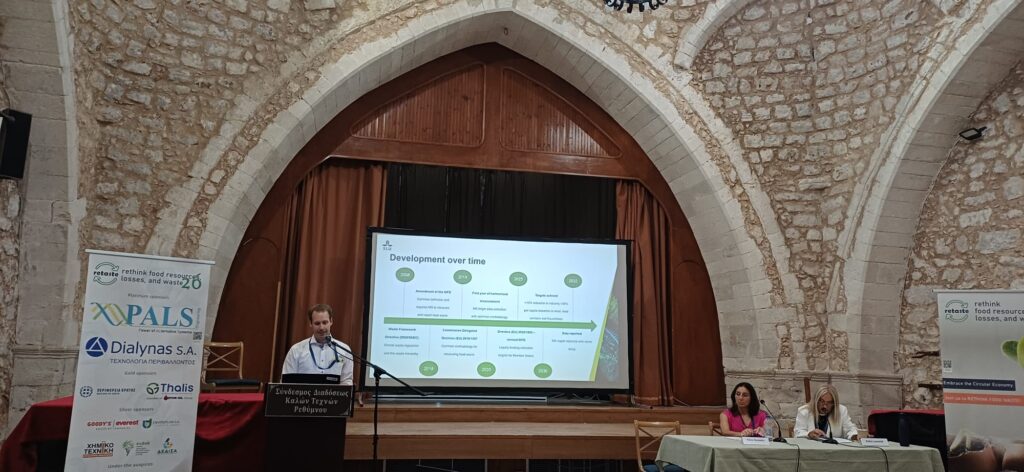
Reliable data are essential to know whether food waste is actually decreasing. But are current monitoring systems precise enough to detect the changes required to meet the EU’s 2030 targets? This question was explored by Mattias Eriksson, researcher at the Swedish University of Agricultural Sciences (SLU) and member of the WASTEWISE project, in research presented at the RETASTE 2026 conference in Greece.
Recent revisions to the EU Waste Framework Directive introduce binding targets for reducing food waste by 2030: 10% in processing and manufacturing, and 30% per capita at retail and consumption levels. Achieving these targets requires monitoring systems capable of detecting relatively small changes in food waste generation over time.
The study, “Monitoring Food Waste in Sweden: Can Current Monitoring Systems Track the EU’s 30% Reduction Target?”, uses Sweden as an illustrative case study, analysing how food waste data are collected and how uncertainty in the underlying measurements affects estimates of food waste. The research examines whether current approaches are precise and robust enough to distinguish genuine reductions from the variability inherent in the data.
The study highlights an important challenge for food waste policy: measuring food waste is not only about producing estimates, but also about understanding how reliable those estimates are. Strengthening monitoring systems and addressing measurement uncertainty will be essential for assessing progress and determining whether real reductions are being achieved on the way towards the EU’s 2030 targets.