Mapping innovations to support food waste prevention
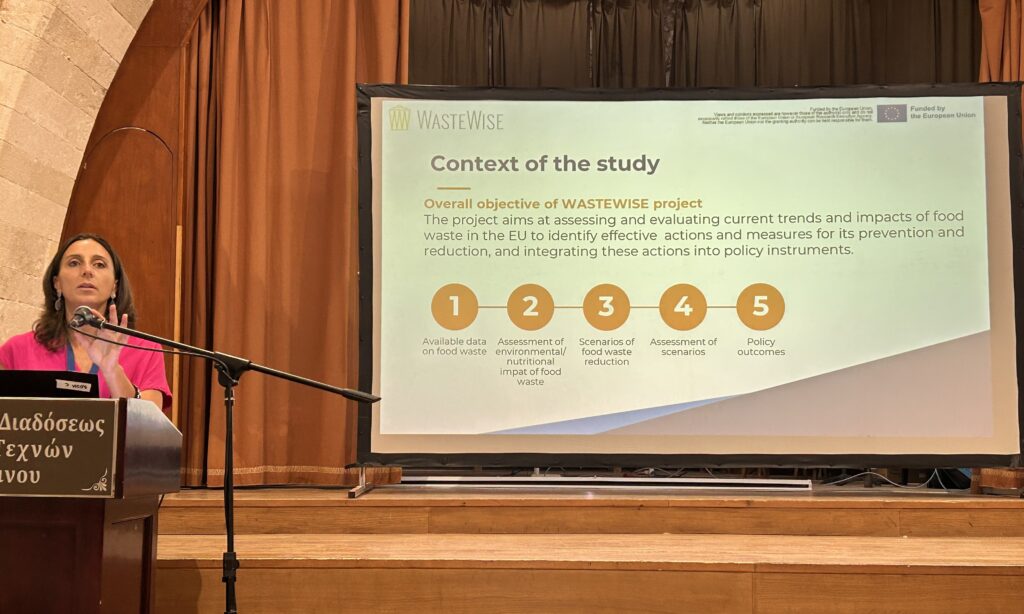
How can innovation contribute to reducing food waste across the food supply chain? This question was at the centre of a study presented by Clara Cicatiello from the University of Tuscia at the RETASTE 2026 conference in Crete. The research, carried out within WASTEWISE, reviews innovations that have been tested and for which evidence of their effectiveness in reducing food waste is available.
Using a PRISMA-based systematic review, the researchers analysed both scientific literature and EU-funded research projects. From an initial pool of 3,012 scientific articles, 939 were selected for further assessment. In parallel, 378 Horizon 2020 and Horizon Europe projects were identified through the CORDIS database, with 42 projects ultimately retained for detailed analysis. Together, these sources were used to build a database containing more than 500 food waste innovations.
The findings reveal a strong predominance of technological innovations, which account for 76% of the innovations identified in the scientific literature and 67% of those from EU projects. However, the analysis also highlights a difference in focus: innovations from the literature largely address recycling and industrial uses, while those tested in EU projects are more strongly oriented towards prevention at source.
Importantly, this database will be further developed within WASTEWISE to support the design of evidence-based food waste reduction scenarios. These scenarios will help the project assess how different actions to reduce food waste could contribute to achieving EU climate objectives, connecting innovation with measurable environmental impact.