How policy instruments can reduce food waste and associated climate impacts
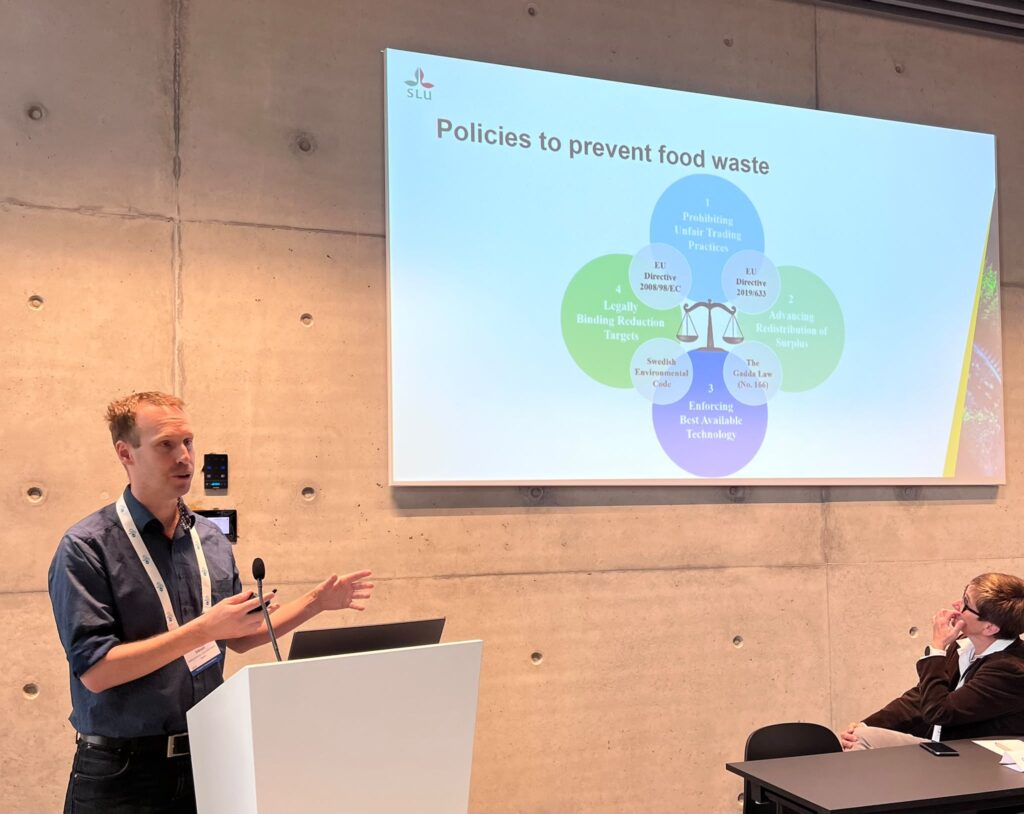
On 20 October 2026, the WASTEWISE partner Mattias Eriksson (SLU) participated in the SETAC Europe 27th LCA Symposium, held in Bruges, Belgium. As part of the session titled “Quanitifying what we avoid: LCA for evaluating waste prevention and reuse”, he presented the results of a recent study in which they compare how different policies can reduce food waste and associated climate impacts, using the Swedish bread supply chain as a case study.
The Swedish bread supply chain is characterised by a small number of large-scale producers distributing nationally and operating take-back systems for unsold products. In the study, researchers applied a consequential life cycle assessment to quantify changes in waste generation and climate impact across the full bread supply chain under four policy scenarios: prohibiting unfair trading practices, advancing redistribution of surplus, enforcing best available technology, and implementing legally binding reduction targets.
Results showed that all scenarios reduce both surplus and climate impact compared to the current system. Waste reductions range from approximately 6% to 50%, with corresponding climate reductions of up to 18%. The largest effects are observed for policies addressing multiple stages of the supply chain, particularly when including reductions at the household level. The findings also highlight that no single intervention can eliminate food waste entirely, underscoring the need to combine prevention with effective valorisation of remaining surplus.